
Summary


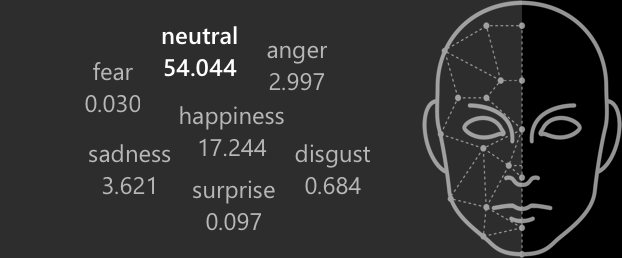
Emoi is an intelligent, non-intrusive way to solicit your user’sfeedback. It helps one identify the details that you, as acompany, product designer or user researcher, may beseeking, but without explicit questioning (through surveys orquestionnaires).
Emoi aims to quantify the qualitative aspects of customer and user research, allowing it to act asa proxy for observations that are considered vague and subjective otherwise. This quantificationwill not only facilitate objective decisions, but also prove to be the evidence when researcherspropose feature improvements to engineering and management teams.
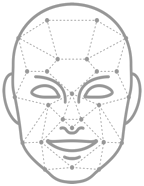
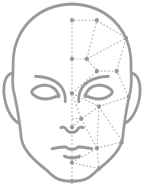
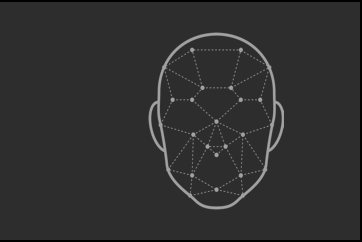
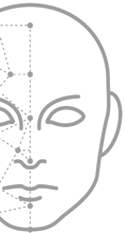
It then analyzes these reactions to infer user’semotional state and visualizes it into a dynamicinteractive representation.
The system observes the user’s physiology, whileshe is immersed in an experience, capturing finedetails of her natural reactions.
Have you ever..



walked out of an event,completely in awe, only to beforced out of your bubble by avolunteer, standing next to thedoor, holding a bunch ofleaflets, requesting everyone forfeedback
Reluctantly, you take the leaflet,and start filling it out. Youmaybe still in the moment, butthe need to express your awe,or excitement on that scale of 5,dampens you a little.
You spend first couple minutesunderstanding the questions,the next couple on deciding inbetween a 4 and a 5, whilehoping for a 4.5.
Problem Space





Over the years, asking people how they felt during an experience has not changedmuch, if at all. You are required to fill out a form, earlier on paper, now on theinternet, asking you to put a number on your feelings, often between 1 to 5.
NOT A PRIORITY
QUESTIONABLE SCALE
Your customers do not have much of anincentive to provide feedback. Besides,questionnaires forces people to takevaluable time out of their schedule
In current form, subtle humansentiments mostly get lost because wetry to map them on to an absolute scale
with no base line reference
This system,
however, has
some flaws
WARRANTS RECALL
SOCIETAL BIAS
As people share opinions, biasesmay creep in and one’s pristine
Since conducted after theexperience, it often requires users
impression may not remain so.Sometimes, it is the need to ‘fit in’, thatcauses people to produce an expectedreaction, as opposed to actual one.
to rely on memory for answering thequestions, & literature shows howmemory is not often our strongest suite.
Over the years, asking people how they felt during an experience has not changed much, if at all. You are required to fill out a form, earlier on paper, now on the internet, asking you to put a number on your feelings, often between 1 to 5.
This system,
however, has
some flaws
NOT A PRIORITY
Your customers do not have much of an incentive to provide feedback. Besides, questionnaires forces people to take valuable time out of their schedule
WARRANTS RECALL
Since conducted after the experience, it often requires users to rely on memory for answering the questions, & literature shows how memory is not often our strongest suite.
QUESTIONABLE SCALE
In current form, subtle human sentiments mostly get lost because we try to map them on to an absolute scale with no base line reference
SOCIETAL BIAS
As people share opinions, biases may creep in and one’s pristine impression may not remain so. Sometimes, it is the need to ‘fit in’, that causes people to produce an expected reaction, as opposed to actual one.
So what if..

80% happy
What if people don’t explicitlyhave to give feedback, but couldlet us know how they feel simplythrough natural reactions?
What if we can capture theexperience in terms more relatablelike attention or affect or simply,happiness quotient?
What if people don’t explicitly have to give feedback, but could let us know how they feel simply through natural reactions?
What if we can capture the experience in terms more relatable like attention or affect or simply, happiness quotient?
Behind The Curtains
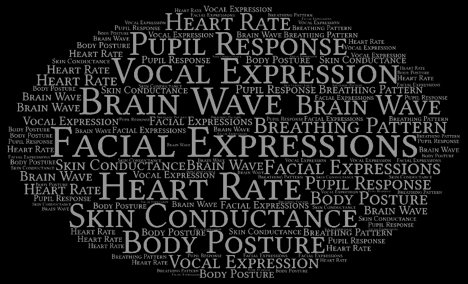
Most apparent way to judge how a person is feeling, is to observetheir reaction (both voluntary and involuntary). Literature suggestsmany ways in which a person’s affective state manifests itself
The processing can be seen
as simple 3 step approach



Capture
Process
Visualize
- Capture
- Process
- Visualize

CAPTURE
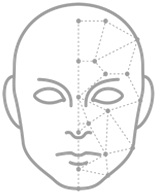
Given the constraints on accessibility of technology, we decided to capture a person’s emotional state throughFacial Expressions and levels of arousal through Skin Conductance. We created two prototypes:
Skin Conductance
To Arousal
Facial Expression
to Emotion
CAPTURE
Given the constraints on accessibility of technology, we decided to capture a person’s emotional state through Facial Expressions and levels of arousal through Skin Conductance. We created two prototypes:
Facial Expression
to Emotion
Skin Conductance
To Arousal


The data captured from theinput, either video or skinconductance feed, is analyzed inthe backend using MicrosoftCognitive Services APIs andAffectiva SDK.
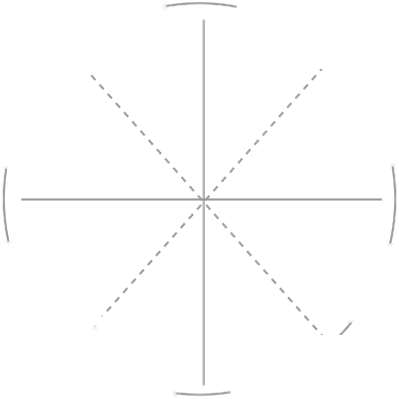
The results received afteranalysis are further filtered andaggregated, so as to beadapted according to thecircumplex representation ofaffect
High Arousal
Tensed
Alert
Excited
Nervous
Elated
Stressed
Happy
Upset
Negative Affect
(Unpleasant)
Positive Affect
(Pleasant)
Sad
Content
Serene
Depressed
Relaxed
Calm
Bored
The data captured from the input, either video or skin conductance feed, is analyzed in the backend using Microsoft Cognitive Services APIs and Affectiva SDK.
The results received after analysis are further filtered and aggregated, so as to be adapted according to the circumplex representation of affect
High Arousal
Negative Affect (Unpleasant)

Positive Affect (Pleasant)
Low Arousal




Arousal vs Time graph,capturing how user’s level ofexcitement and engagementvaried over time.
On a time axis to understandhow the emotion distributionvaried over time
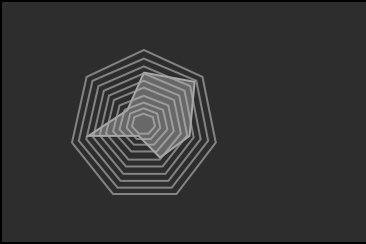
In a spider graph, capturing therelative difference in theindividual emotions
Applications


Professionals in UX industry can quantitatively evaluate the cognitive aspects of anexperience, which may often get lost in transcription. This enables them to back theirinsights with real-time data when proposing a feature improvement to engineering andmanagement teams.
UX Research
& User Testing
Video games warrant user engagement - which can be measured in terms of attentionspan, excitement levels and emotions. Emoi can not only be used during User and PlayTesting, but it can also be used to customise the game experience for players on the fly,while they are engaged in the game.
Video Games
UX Research
& User Testing
Professionals in UX industry can quantitatively evaluate the cognitive aspects of an experience, which may often get lost in transcription. This enables them to back their insights with real-time data when proposing a feature improvement to engineering and management teams.
Video Games
Video games warrant user engagement - which can be measured in terms of attention span, excitement levels and emotions. Emoi can not only be used during User and Play Testing, but it can also be used to customise the game experience for players on the fly, while they are engaged in the game.


Emoi can also be used to analyse the experience of various movie goers, particularly duringpre-screening phase, to understand how they were feeling while watching the movie. Thiscan provide interesting insights which can be fruitful in editing the movie further, beforeactual release.
Movies
Emoi can be used to understand the engagement levels of participants in an event/workshop, which in turn can inform the organisers about the the effectiveness of speakers.
Events
& Workshops
Movies
Emoi can also be used to analyse the experience of various movie goers, particularly during pre-screening phase, to understand how they were feeling while watching the movie. This can provide interesting insights which can be fruitful in editing the movie further, before actual release.
Events
& Workshops
Emoi can be used to understand the engagement levels of participants in an event/ workshop, which in turn can inform the organisers about the the effectiveness of speakers.

Emoi turn the table on feedback gathering process bytaking the onus of giving and collecting the correct inputoff the users and researchers, respectively, allowing themto be more natural and relaxed throughout the process.