
SUMMARY
TEAM MEMBERS:
Swar Gujrania, Stefan Stojanov, Jeevitesh Juneja, Jatin Arora
ROLE:
User Research, Experiment Design


“More than anything else, men and women seek happiness”
Aristotle
Flow is a state of absolute absorption in an activity that makes the experience of that activity truly enjoyable.
Csikszentmihaly describes that when in flow, people experience
Time
distortion
Exhiliarating feeling
of transcendance
Lack of
self-consciousness
Alertness
Control
“More than anything else, men and women seek happiness”
Aristotle
Flow is a state of absolute absorption in an activity that makes the experience of that activity truly enjoyable. Csikszentmihaly describes that when in flow, people experience
- Alertness
- Control
- Lack of
self-consciousness - Time
distortion - Exhiliarating feeling
of transcendance

But how does one get to Flow? We tried to understand this for a really cool activity - Video Games!
physiological and self-reporting measures, we tried to wrap our head around this phenomenon that leads us to satisfaction.. and
yes,Happiness!
Through a mixture of
But how does one get to Flow? We tried to understand this for a really cool activity - Video Games! Through a mixture of physiological and self-reporting measures, we tried to wrap our head around this phenomenon that leads us to satisfaction.. and yes,Happiness!




But.. Why?
Measuring flow has a diverse set of applications, ranging from understanding productivity to why people self-improve.
Traditionally, flow has been measured through questionnairs, which is slow, intrusive and can only be done when the person is out
of the flow inducing activity that researchers are testing her for (Catch 22 much!)
Thus, in our study, we augment the standard questionnaires with physiological measures and examine them against player’s
performance to see if there are any patterns.
Physiology
Player
performance
Questionnaires
Player
Positions
Eye
gaze
FSS
DFS-2
Facial
expressions
But.. Why?
Measuring flow has a diverse set of applications, ranging from understanding productivity to why people self-improve. Traditionally, flow has been measured through questionnairs, which is slow, intrusive and can only be done when the person is out of the flow inducing activity that researchers are testing her for (Catch 22 much!)
Thus, in our study, we augment the standard questionnaires with physiological measures and examine them against player’s performance to see if there are any patterns.
Questionnaires
- FSS
DFS-2
Physiology
- Facial
expressions - Eye
gaze
- Player
performance - Player
Positions
USER RESEARCH DESIGN
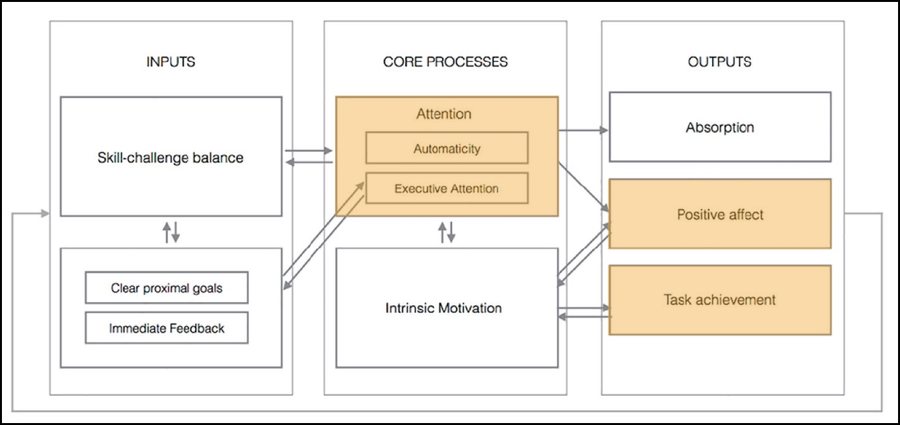
We started with a cognitive model of flow called Flow Engine Framework, which models the characteristics of Flow into Input-
processing-output model. Of these, we decided to focus on translating two measures into physiology.
Flow Engine Framework
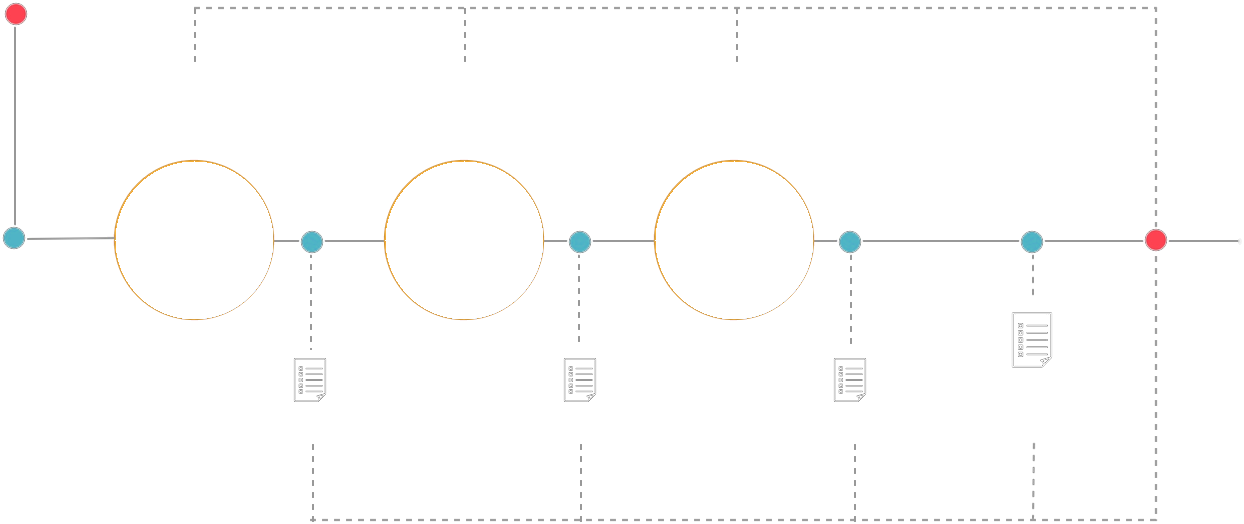


Experiment Design
Sample & recruit
participants
recording data
recording data
recording data
Game
Session 1
Game
Session 3
Game
Session 2
Compiled
Data
Game demo
Sample session
Final questionnaire
(DFS-2)
Questionnaire 3
Questionnaire 1
Questionnaire 2
Experiment design for the project
The game was designed to provide ascending levels of difficulty with 3 natural breakpoints, in which participants took a shortsurvey about their immediate experience. At the end of the session, participants a different kind of questionnaire to assess theirnatural tendency for flow in video games.
- Sample & recruit
participants - Game demo
Sample session - Game
Session 1recording data - Questionnaire 1
- Game
Session 2recording data - Questionnaire 2
- Game
Session 3recording data - Questionnaire 3
- Final questionnaire
(DFS-2) - Compiled
Data
Experiment design for the project
The game was designed to provide ascending levels of difficulty with 3 natural breakpoints, in which participants took a short survey about their immediate experience. At the end of the session, participants a different kind of questionnaire to assess their natural tendency for flow in video games.






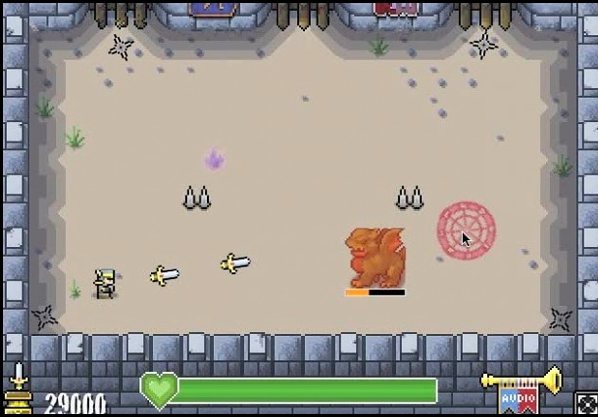
Game Design
Onslaught Arena is a simple arcade shooter game with minimal controls. The game levels
allow us to understand how participants with different skill levels engage with the game
at different difficult levels. It also provides useful statistics, such as player accuracy and
overall score which helped us learn more about a players’ relative skills.
Physiological Data
During our experiments we collected video of our participants’ faces and tracked their gaze position on the screen during
gameplay.
Affect
Gaze
Using Affectiva SDK, we gathered
measures such as attention,
engagement and valence.
We used a Tobii eyeX eye tracker to
collect our participants’ gaze fixation
during the study.
Onslaught Arena is a simple arcade shooter game with minimal controls. The game levels allow us to understand how participants with different skill levels engage with the game at different difficult levels. It also provides useful statistics, such as player accuracy and overall score which helped us learn more about a players’ relative skills.
During our experiments we collected video of our participants’ faces and tracked their gaze position on the screen during gameplay.
Affect
Using Affectiva SDK, we gathered measures such as attention, engagement and valence.
Gaze
We used a Tobii eyeX eye tracker to collect our participants’ gaze fixation during the study.
FactorConcentration during gameplay (F1)
Question
- How concentrated were you while playing?
Comments
This is a measure of how engaged the user was while playing each level of the game. This is a self-reported measure and hence inherently subjective.
FactorPerceived difficulty during gameplay (F2)
Question
- What amount of challenge did you feel while playing?
Comments
Csikszentmihalyi et al. [17] observed perceived challenge as a strong predictor of player enjoyment in chess games assuming intrinsic motivation of the players. The players enjoyed more when playing against other players of slightly high chess rating which lead to close games
FactorConcentration enjoyment during gameplay (F3)
Question
- Did you enjoy the concentration level that you had during the game?
- Did you feel stressed while playing?
Comments
In their recent paper [16], Corcos et al. have argued that perceived game enjoyment improves the estimation of Flow, and can even give better results than the traditional measures namely concentration and enjoyment. They used concentration enjoyment and challenge enjoyment to measure Flow in different levels of FPS (first-person-shooting) games, and presented data-based evidence of their hypothesis.
FactorChallenge enjoyment during gameplay (F4)
Question
- What amount of challenge did you feel while playing?
- Do you enjoy the challenge that the game poses?
Comments
This factor indicates how much did the players enjoy the challenge that they experienced in different levels of the game. Like F3, it emphasizes the experience of the player rather than just concentration and perceived challenge.
FactorPerceived skill during gameplay (F5)
Question
- How comfortable did you feel with the increasing no. of monsters?
- How much control did you feel while playing the game?
Comments
One problem with the enjoyment related measures (F3, F4) is that they can be biased by the player’s affect post completing the level (like through achieved scores) etc. Players’ perceived skill during the game or how well did he play the game aims to balance that bias. Hence, high level of F3, F4 along with high F5 would indicate bias on post-game affect and can be compensated for in the analysis. Otherwise, an intermediate level response on F5 would indicate Flow.
RESULTS

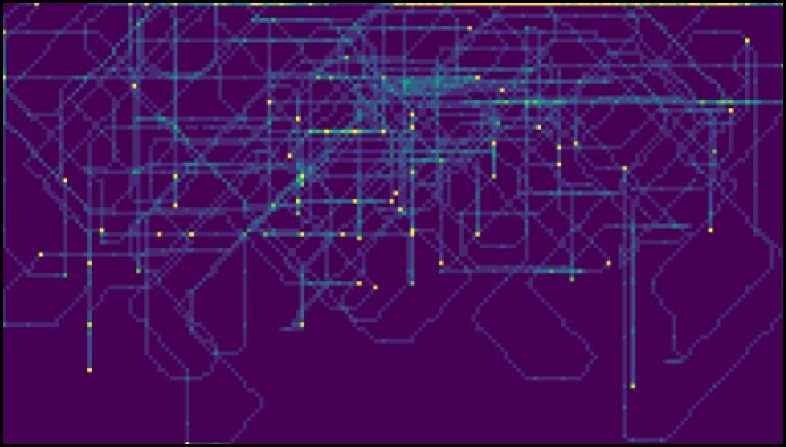
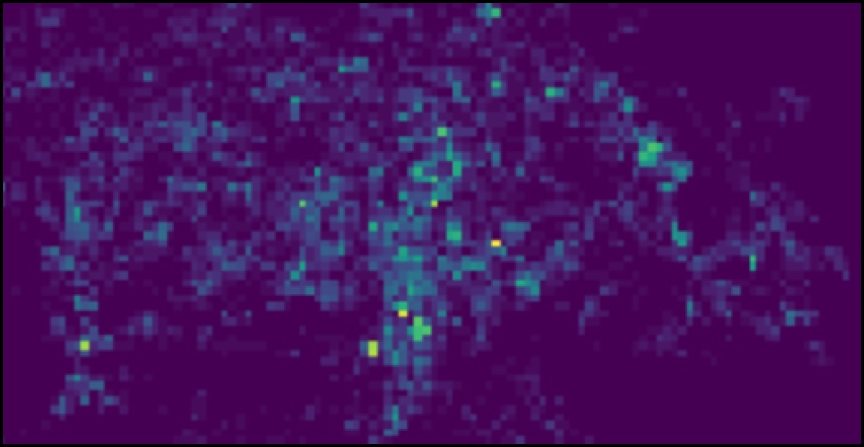
We created heat maps for player position data and player’s gaze data for each play session.
Player position heat map
Player gaze heat map
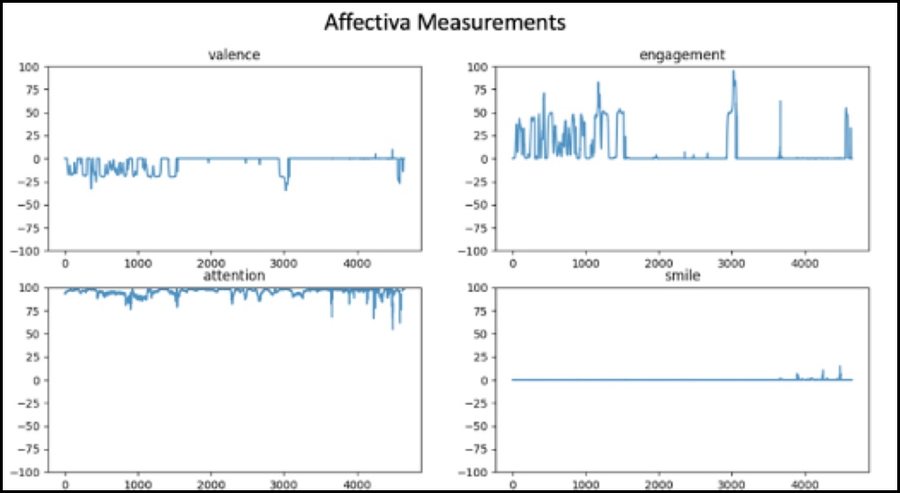
We also visualized the data collected from facial expression tracking to map Valence (positive / negative feeling), Engagement,
Attention and Smile.
Player’s Affect
ANALYSIS & CONCLUSION
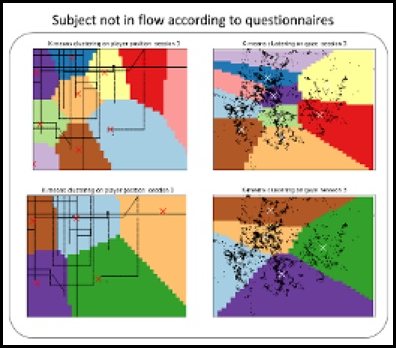
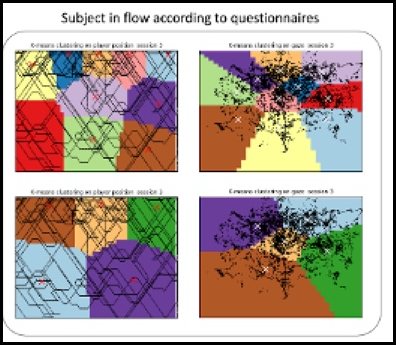
We analyzed the gaze and position data using K-Means clustering. Both player position and gaze position significantly depends on
the player’s style and skill level.
We observed that:1. More experienced players had significantly more movement thanless experienced ones.
2. Our chosen game did not restrict gaze patterns because of
random nature on moster attacks.
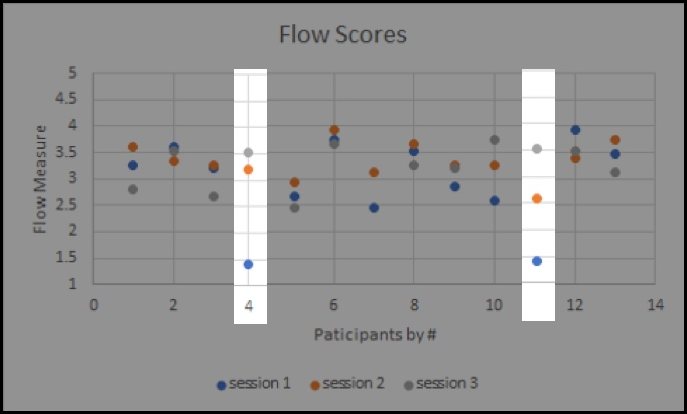
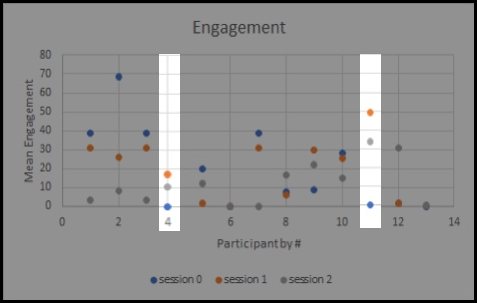
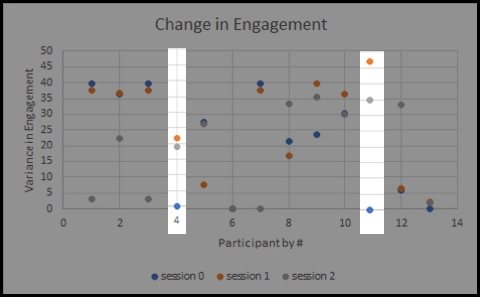
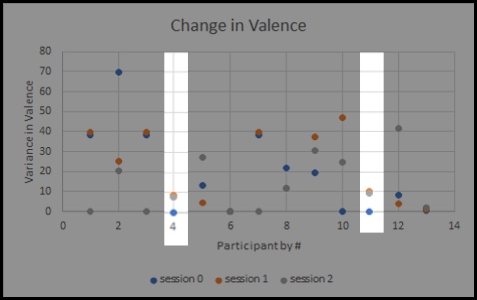
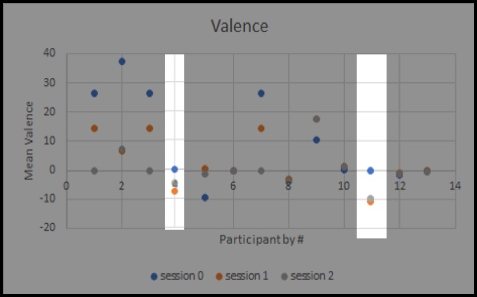
For Affect, there were mostly no general trends. However, for experienced gamers (P4 and P11), whose Flow score increased with
each session, the mean and variance in valence and engagement followed identical trends:
However, while these two participants showed very strong similarities, this did not hold true for the rest of the less proficient
participant pool making these results statistically insignificant.


Conclusion
There could be several explanation for these results:
1. Physiological measures are not an accurate indicator
of Flow
and ill-suited for the task.
2. The measures we chose were too noisy
3. People express emotions
differently.
While there are some observable correlations, a strong relationship between our physiological measures and the calculated Flow
score could not be found. However, we believe there is enough evidence to warrant further study in the relationship between Flow
and physiological measures.
There could be several explanation for these results:
- 1. Physiological measures are not an accurate indicator of Flow
- 2. The measures we chose were too noisy and ill-suited for the task.
- 3. People express emotions differently.
While there are some observable correlations, a strong relationship between our physiological measures and the calculated Flow score could not be found. However, we believe there is enough evidence to warrant further study in the relationship between Flow and physiological measures.